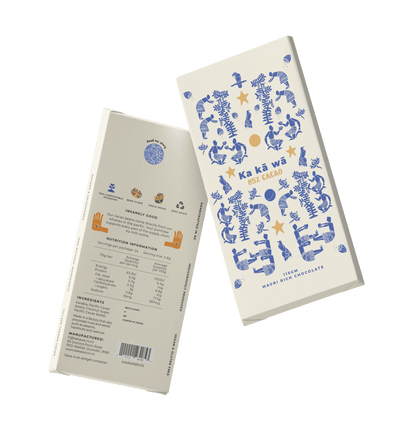
Pacific Cacao: The Flavours of Place
Chocolate has a terroir.
Just as wine reflects the vineyard it came from and coffee carries the fingerprint of the mountain where it was grown, cacao tells the story of the place it calls home.
Climate. Rainfall. Volcanic soils. Elevation. Genetics. Fermentation. Drying. The people who grow it. The traditions they carry. Every one of these leaves its mark on the bean long before it ever reaches a chocolate maker.
That is what single-origin means.
It means the flavour has a location.
At Ka kā wā we choose to celebrate those differences rather than blend them away. Each origin has its own personality, its own rhythm, and its own story to tell. Our role is simply to honour what is already there.
Papua New Guinea: Bright, Vibrant and Alive
Papua New Guinea is home to some of the world's most exciting cacao.
Growing in rich volcanic soils and tropical climates, the beans often develop bright fruit characteristics that remain beautifully expressive even after roasting. Depending on the region and harvest, you may notice notes of red berries, dried fruit, citrus or tropical fruit, balanced by a clean cocoa finish.
What makes PNG cacao so distinctive is its natural brightness.
It has an energy to it.
A liveliness that lifts the chocolate beyond bitterness and allows complexity to unfold as it melts. Rather than feeling heavy, it feels vibrant, with layers that continue to evolve on the palate.
If you're new to craft chocolate, PNG cacao is often surprising. Many people have never experienced dark chocolate with this much fruit naturally present, yet nothing has been added. Those flavours were already inside the bean, waiting to be revealed.
Solomon Islands: Deep, Grounded and Comforting
Where Papua New Guinea reaches upward, the Solomon Islands invite you to settle in.
The cacao from these islands is often fuller, rounder and more grounded. It carries rich cocoa notes with gentle earthiness and a depth that lingers long after the chocolate has melted away.
There is still complexity, but it speaks more quietly.
Instead of bright acidity leading the experience, you'll often find warm chocolate notes, subtle dried fruits, roasted nuts or soft spice depending on the harvest and roast profile.
It is generous, comforting and deeply satisfying.
This is part of why the two origins complement each other so beautifully across the Ka kā wā range. They offer two distinct expressions of Pacific cacao, each shaped by its own environment and growing traditions.
Neither is better than the other.
They are simply different.
Vanuatu: A New Chapter
Vanuatu is the newest addition to the Ka kā wā origin story.
For now, you can experience these beautiful beans through our Roasted Cacao Snack Beans, offering one of the simplest and most honest ways to taste cacao close to its natural character.
There is nothing to hide behind.
No added sugar.
No additional ingredients.
Just roasted cacao beans expressing everything that the land, climate and careful post-harvest handling have created.
They are crunchy, deeply satisfying and often surprising to people tasting cacao in its simplest form for the first time.
Over the coming months we'll be expanding our Vanuatu range as we continue building relationships with growers and exploring what these remarkable beans have to offer.
Like every origin we work with, our focus isn't simply on sourcing great cacao. It is about building long-term relationships with Pacific communities and celebrating the unique character each island brings to the world of chocolate.
Why Single-Origin Matters
For many years, most commercial chocolate was made by blending beans from multiple countries together to create a consistent flavour.
Consistency has its place. But it also hides individuality. Single-origin chocolate allows the bean to retain its identity.
Instead of asking every harvest to taste the same, it celebrates the subtle differences that naturally occur from one place to another, and even from one season to the next. Just as no two vintages of wine are identical, cacao also reflects the year, the weather and the growing conditions.
Those small variations aren't flaws. They're part of the beauty.
Learning to Taste Place
The fastest way to understand single-origin cacao isn't by reading about it. It's by tasting it.
Take two bars from different origins.
Break off a piece of each.
Taste one slowly before moving to the next.
Notice where the flavour begins.
Notice how it changes.
Notice what lingers.
There are no right or wrong answers. Some people notice fruit immediately. Others notice roasted nuts, honey, earth, flowers or spice.
Your palate becomes more sensitive each time you pay attention. That is one of the gifts of craft chocolate. It teaches us that flavour isn't something added. It is something discovered.
Every bean carries the story of the place it was grown. Every harvest is a conversation between land, climate and the people who care for it. When we choose single-origin cacao, we aren't simply choosing chocolate.
We're choosing to taste a place.